गुरुआस्था समाचार
सरस्वती साइकिल योजना से बेटियों के सपनों को मिल रही नई उड़ान : अमर अग्रवाल
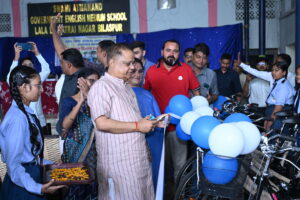
बिलासपुर – विधायक अमर अग्रवाल ने आज लाला लाजपत राय नगर स्थित स्वामी आत्मानंद विद्यालय एवं शासकीय उच्चतर माध्यमिक विद्यालय, राजेंद्र नगर में आयोजित सरस्वती साइकिल योजना के साइकिल वितरण कार्यक्रम में शामिल होकर छात्राओं को साइकिल वितरित की। इस अवसर पर उन्होंने छात्राओं को उज्ज्वल भविष्य की शुभकामनाएं देते हुए शिक्षा के महत्व पर बल दिया।
अमर अग्रवाल ने कहा कि सरस्वती साइकिल योजना केवल छात्राओं को साइकिल उपलब्ध कराने की योजना नहीं, बल्कि बेटियों की शिक्षा, आत्मनिर्भरता और सशक्तिकरण की दिशा में एक महत्वपूर्ण पहल है। इससे छात्राओं के लिए विद्यालय तक पहुंच आसान होगी, उनका आत्मविश्वास बढ़ेगा और वे बिना किसी बाधा के अपनी पढ़ाई जारी रख सकेंगी।
उन्होंने कहा कि शिक्षा ही जीवन में सकारात्मक परिवर्तन का सबसे प्रभावी माध्यम है। प्रदेश सरकार छात्राओं को बेहतर शैक्षणिक अवसर उपलब्ध कराने और उन्हें आत्मनिर्भर बनाने के लिए निरंतर कार्य कर रही है। यह योजना बेटियों को अपने सपनों को साकार करने की नई प्रेरणा और नई गति प्रदान करेगी।
अमर अग्रवाल ने कहा कि शिक्षित और सशक्त बेटियां ही समाज और राष्ट्र के उज्ज्वल भविष्य की आधारशिला हैं। उन्होंने सभी छात्राओं से मन लगाकर अध्ययन करने, अपने लक्ष्य के प्रति समर्पित रहने और जीवन में आगे बढ़कर परिवार, समाज तथा प्रदेश का नाम रोशन करने का आह्वान किया।
कार्यक्रम के दौरान जनप्रतिनिधिगण, विद्यालय परिवार, शिक्षक-शिक्षिकाएं, अभिभावक एवं बड़ी संख्या में छात्राएं उपस्थित रहीं।
Examples are most effective when they make an abstract idea visible without overwhelming the principle they are meant to explain. In education, a strong illustration usually begins with familiar details, then introduces one variable at a time so learners can distinguish the rule from the surrounding story. A short
test case in a lesson can reveal whether students understand the underlying method, especially when its answer requires applying a concept rather than repeating a definition. That diagnostic value increases when the case includes a plausible mistake, because comparing the error with the correct reasoning exposes where interpretation went astray. Editors and teachers should also vary the scale and setting of their illustrations: a simple household decision may clarify the basic mechanism, while a carefully chosen workplace or scientific case can show how the same principle behaves under pressure. The best examples therefore do more than decorate an explanation; they create a bridge between general knowledge and decisions that readers must make in practice.
Well-designed examples do more than illustrate an answer; they reveal how a method works and where judgment is required. In classrooms and professional training, a worked example is strongest when it states the problem, shows the relevant steps, and explains why each decision matters. In assessment design, a
test example should mirror the skill being measured while remaining distinct enough to show whether learners can transfer the method rather than memorize a pattern. The surrounding practice should then vary the data, wording, or constraints, because small changes expose gaps that a repeated exercise may conceal. Clear solutions are also important: they should identify common errors, distinguish essential reasoning from optional detail, and provide a standard against which learners can check their work. Used this way, examples become a bridge between explanation and independent performance, supporting both accuracy and adaptable thinking without reducing complex subjects to formulaic routines.